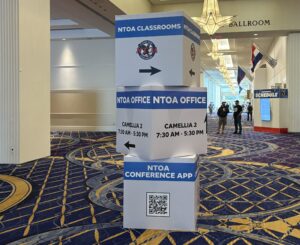
This year I had the privilege of presenting at the NTOA Law Enforcement Operations Conference in Maryland. A gathering that continues to set the bar for high-level training, networking, and professional development in our field. For crisis negotiators, tactical commanders, and law enforcement leaders, the NTOA conference isn’t just another event on the calendar. It’s a chance to sharpen the craft, reconnect with colleagues from across the country, and walk away with new insights that make us better when it matters most. Teaching there is always an honor. This year, it came with a few bonus experiences I’ll never forget.
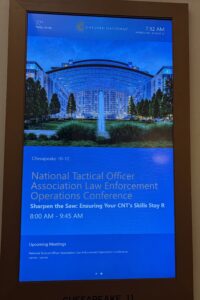
My first presentation centered around keeping your Crisis Negotiation Team engaged, trained and sharp. Teams are faced with decreased budgets, lack of callouts and sometimes inadequate equipment. I shared some of the tricks of the trade that I developed for my team and how to incorporate those ideas. My second presentation involved a case study where a 48-year-old male who was wanted for several outstanding warrants barricaded in his parent’s home. His 66-year-old father was also in the house and refused to exit. The situation soon took a turn for the worse when the male became suicidal and was brandishing a shotgun. After several hours we were able to get the father out of the house. Quick thinking by the tactical team allowed us to resolve the situation peacefully. Sharing lessons learned, mistakes made, and strategies refined over two decades of negotiation felt like contributing a small piece to the larger co6nversation about where we’re headed as a profession.
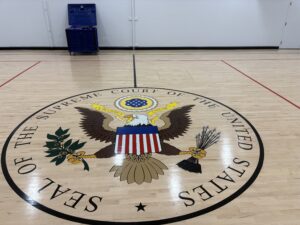
Beyond the classroom, the week turned into a tour of some of the most iconic and historically significant places in American law enforcement and government. It began with an unexpected invitation to tour the United States Supreme Court. Standing inside that building, surrounded by the weight of centuries-defining decisions, was powerful enough. But getting to step into the basketball court above the courtroom the “Highest Court in the Land” was the perfect mix of humor and history. It’s one of those quirky facts every negotiator will now hear from me at a conference, guaranteed.
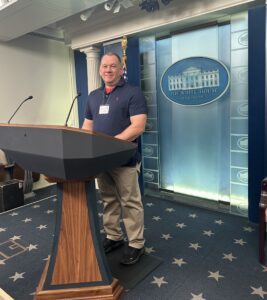
The experience continued with a tour of the West Wing of the White House. For someone who’s spent a career studying leadership in crisis, walking the same hallways where some of the most consequential decisions in modern history were made felt surreal. Seeing the Situation Room, the iconic corridors, and the photos that line the walls was a reminder of how quickly leaders must adapt, communicate, and act when everything is on the line. It made the lessons we teach about calm under chaos feel even more relevant. Being able to stand behind the podium in the James S. Brady Briefing Room was a once in a lifetime experience.
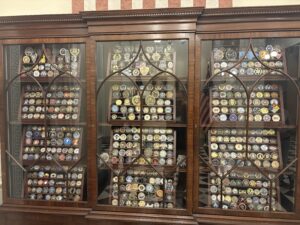
One of the more unexpected highlights was seeing Donald Trump’s challenge coin collection, a surprisingly impressive lineup of coins gifted from military and law enforcement units. For someone who collects challenge coins from negotiator teams nationwide, it was a fun and unexpected surprise.
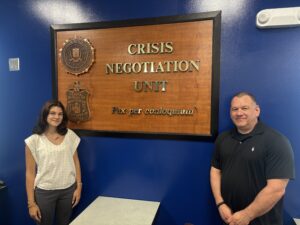
From there, I had an opportunity that only a handful of negotiators ever get: a visit to the FBI Academy at Quantico, including the Crisis Negotiation Section. Meeting with the professionals who support the Bureau’s most complex incidents was energizing. It felt like visiting the epicenter of our profession where research, tactics, and real-world application intersect. I also had a chance to walk through Hogan’s Alley, the famed mock city where agents train. You could feel the history there from undercover ops to high-risk scenarios that shaped generations of FBI agents.
The tour continued at the National Museum of the Marine Corps, an incredibly moving tribute to service and sacrifice. The immersive exhibits put you inside the major battles, decisions, and moments that defined the Corps. It was a powerful reminder of the legacy of courage we stand on in law enforcement.

By the time the week wrapped up, I realized this experience wasn’t just about presenting at one of the best conferences in the country. It was about connecting the dots between our work today and the institutions, people, and history that have shaped it. The NTOA LE Ops Conference continues to be one of the most meaningful professional gatherings in our field and this year, it also became a week of moments I’ll be talking about for the rest of my career.